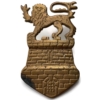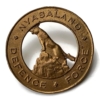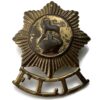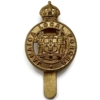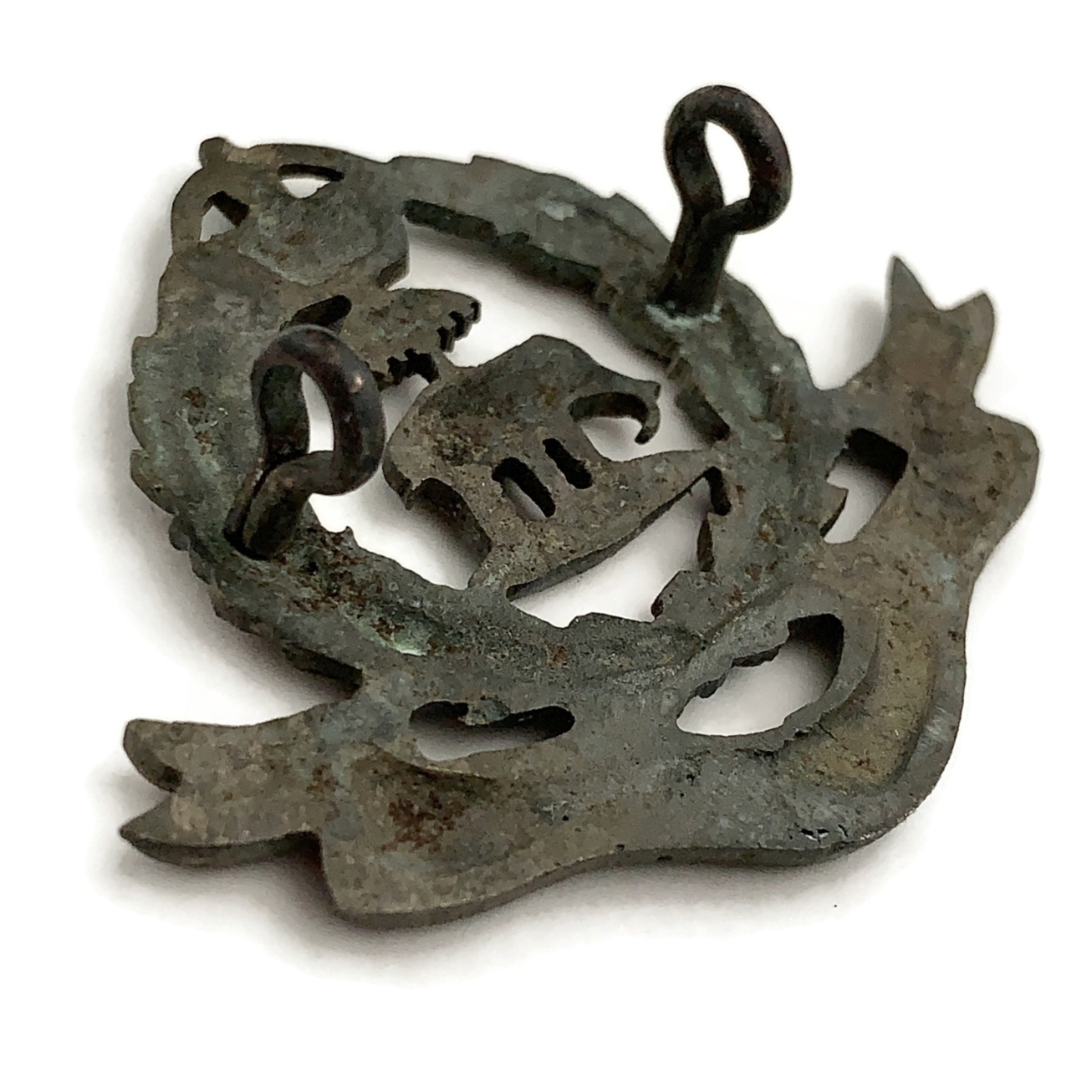
Guaranteed original. Complete & intact. This is an original Nigeria Police British Colonial Nigerian Cap Badge for sale. In good condition. Please see our other items for more original WW1, WW2 & post war British military cap badges for sale including other Nigeria Police British Colonial Nigerian cap badges.
For more original cap badges for sale, click here.
History of the British Colonial Nigerian Police Force
The history of the British colonial Nigerian police force is closely tied to the expansion and administration of the British Empire in West Africa. Modern policing in Nigeria began in the mid-19th century as Britain consolidated political and economic control over the region, eventually forming the Colony and Protectorate of Nigeria in 1914. The colonial police system was designed primarily to maintain imperial authority, protect trade routes, enforce colonial laws, and suppress resistance rather than to serve local communities.
Origins and Early Development
The earliest precursor to the Nigerian Police Force was the Consular Guard, established in Lagos in 1861 following British annexation. This small paramilitary unit later evolved into the Hausa Constabulary in 1879, composed largely of northern recruits under British officers. Similar forces emerged across the protectorates, including the Niger Coast Constabulary and the Royal Niger Company Constabulary. These units were eventually unified in 1930 as the Nigerian Police Force, operating under the authority of the colonial government and the British Crown.
Role Under British Colonial Rule
During the height of the British Empire, the Nigerian colonial police functioned as a tool of indirect rule. Their responsibilities included tax enforcement, crowd control, arrest of political agitators, and support for colonial courts. Police units were often deployed alongside the military to quell uprisings such as the Aba Women’s War of 1929. Policing was hierarchical and racially stratified: senior ranks were dominated by British officers, while Nigerians served largely in lower ranks until the late colonial period.
Cap Badges and Insignia Design
British colonial Nigerian police cap badges and insignia reflected imperial symbolism and authority. Early cap badges typically featured a Tudor Crown (later the King’s or Queen’s Crown depending on the reigning monarch), symbolizing loyalty to the British Crown. Below the crown, badges often displayed a circular or star-shaped design bearing the words “Nigeria Police” or “Colonial Police” in raised lettering.
Some variations incorporated laurel wreaths, representing order and victory, while others used eight-pointed stars, a common motif in British colonial police forces. Rank insignia closely followed British policing traditions: chevrons for constables and corporals, crowns for inspectors, and crossed batons or pips for senior officers. Uniform colors were typically dark blue or khaki, suitable for tropical climates, and badges were made of brass or white metal depending on rank and era.
Transition to Independence
As nationalist movements gained strength after World War II, Nigerians increasingly filled senior police roles. Training institutions expanded, and insignia slowly shifted to reflect national identity. With Nigeria’s independence in 1960, colonial symbols such as the British crown were removed from police cap badges, replaced by the Nigerian coat of arms—marking the end of colonial policing and the birth of a sovereign national force.
Legacy
The British colonial Nigerian police force laid the institutional foundation for modern policing in Nigeria. While its legacy is often criticized for authoritarian methods and limited community engagement, its structures, ranks, and insignia continue to influence the Nigerian Police Force today.
Please see our other items for more original WW1, WW2 & post war British military shoulder titles for sale including other British Army colonial cap badges.