
Where to Sell a WW1 Death Plaque (Dead Man’s Penny) in the UK?
If you own or have inherited an original First World War death plaque and want to sell it, there are several options available, including selling directly to a specialist militaria dealer, selling to a generalist antique buyer, online marketplaces and auction houses. Here at British Military Badges, we specialise in buying British military medals, death plaques and WWI militaria and so can offer you a much higher price than generalist buyers of antiques with the added benefit of you not having to hand over 51% of the value to an auction house (most of whom now charge buyers commission at about 33% and sellers fees at about 18%). This 51% total fees end up having to come out of the value of the items you are selling unfortunately.
So if you have a WW1 death plaque to sell, we invite you to get in touch with us to discuss your item and explore your selling options. Just email us at:
sales@britishmilitarybadges.co.uk
with a photo of the death penny you wish to sell and we will get back to you with an immediate cash offer! We buy all types of British miliary medals, death pennys and WW1 militaria.
In this guide, we explain where to sell a WW1 death plaque, what affects its value, how to identify an original plaque, and how to get started if you would like to sell yours.
Where can I sell my WW1 death plaque?
If you are wondering where to sell a WW1 death plaque in the UK, the main options are specialist militaria dealers, generalist antiques buyers, online marketplaces and traditional auction houses. The best choice depends on whether you prioritise convenience, a specialist assessment, or price.
1. British Military Badges – a specialist military collectibles business
If you want to sell a WW1 death plaque, we at British Military Badges are a specialist business worth contacting. Our focus on British military medals, plaques, military memorabilia and collectibles means we can offer you the highest price and value for your militaria. Unlike generalist antique buyers who make their money from quick turnover and volume, offering to buy everything from cutlery to watches to silver to stamps, we only buy military items, so we have a greater depth of knowledge combined with a huge cliental of militaria collectors ready to buy. This allows us to make far better offers than other antique buyers who spend a lot of money advertising heavily and buy anything and everything.
We encourage anyone considering selling a death plaque to contact us first with photographs and any information they have about the plaque and allow us to examine the item and offer you the best price from a specialist buyer.
Even if you have very little information on the WW1 death penny and medals, that is not a problem as we will be able to do all the research at our end needed to offer you a price. A photo so we can see the condition etc. is really all you need!
Visit British Military Badges to find out more about our business and contact us about your military collectibles.
Why consider a specialist? A dealer who regularly handles military collectibles may be better placed to recognise an item’s significance, assess its condition and consider its potential interest to collectors than a general second-hand buyer.
2. Generalist Antiques Buyers
Lots of generalist antique buyers have been popping up recently buying anything and everything. And whilst you won’t get anywhere near as much money from your military collectibles than we can offer (we have been told on numerous occasions our offer was sometimes two or three times higher than vintage cash cow for example), they do have the benefit of taking everything. So if as well as medals of death pennies, you also have cutlery, watches, ceramics etc. then they will at least take everything from you.
3. Online marketplaces such as eBay
Online marketplaces can give you access to collectors directly. Original WW1 death plaques do appear on online auction and marketplace platforms, making them another possible route if you prefer to manage the sale yourself. But please be aware of your duties now regarding reporting sales on eBay etc. to HMRC. eBay will automatically pass your details on to HMRC if you sell either £1000+ worth of items on eBay in a financial year or more than 29 items. So if you cross either of those thresholds, please remember to fill out a self-assessment tax return.
Before listing your plaque, research comparable items that have actually sold, rather than relying exclusively on current asking prices. An unsold plaque advertised for £150 does not necessarily mean that £150 is its realistic market value. Make sure your description is accurate, particularly regarding originality, condition and any accompanying documents.
4. Auction houses
Traditional auction houses are another option, especially if the plaque forms part of a larger group of medals, documents and military memorabilia. But the larger the value of medals, plaques or collection, the heavier the toll of fees our. Collectors have take into account buying commission when they bid on an item, so a medal that they are happy to send £200, means they can only actually bid about £140 taking into account the buyer’s commission + postage costs. Additionally, the auction house will then further take a cut of around 18% – 24% in seller’s comission.
For a single, relatively modestly valued plaque, the costs and practicalities of auction may influence whether this is the most suitable option.
How much is a WW1 death plaque worth?
The value of a First World War death plaque depends on several factors, including condition, originality, the identity of the recipient and the availability of associated historical material.
There is no single price that applies to every plaque.
The following factors can make a difference to its potential value:
- Condition: Original surfaces, legible lettering and an absence of significant damage can influence desirability.
- Recipient identification: The name can sometimes be researched through historical records, helping establish the individual’s identity and service history.
- Historical interest: A recipient’s military service, circumstances of death or connection to a notable event may attract additional collector interest, depending on the evidence.
- Original packaging and documents: An original cardboard envelope, correspondence or other associated paperwork may add interest and, in some cases, value.
- Provenance: A documented history of ownership or a convincing connection to the recipient can be helpful.
- Rarity and collector demand: Demand varies, and two plaques in apparently similar condition may attract different levels of interest.
If you want to sell your plaque, it is worth obtaining an informed assessment before deciding on a price. A photograph and the recipient’s name are useful starting points, although an accurate valuation may require closer examination and additional research.
Be cautious about assuming that a plaque must be valuable simply because it is more than a century old. Equally, do not assume that an inherited plaque is of little interest because you have not yet identified its recipient.
 How to identify an original WW1 death plaque
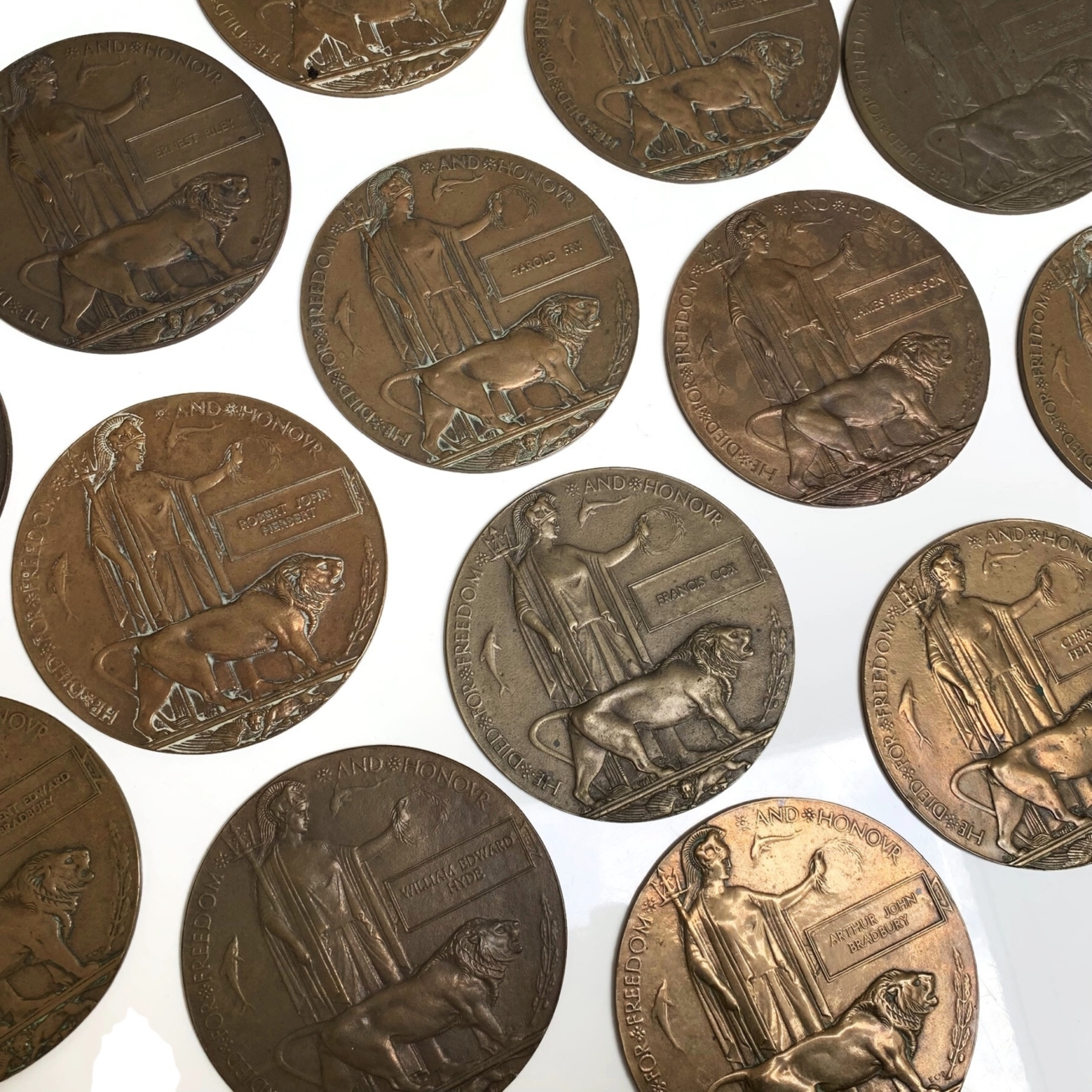
First World War death plaques are commonly known as the Dead Man’s Penny or death penny. They were issued to commemorate eligible members of the British and Empire forces, as well as other eligible individuals, who died as a result of the war.
The plaques were made of bronze and bear a representation of Britannia, a lion and the commemorated individual’s name. They were not conventional service medals, but commemorative items issued to the next of kin.
If you have inherited one, there are several things worth checking before you sell it.
- Examine the design. Compare the plaque with reliable photographs and descriptions of original examples.
- Check the lettering. Look closely at the name and the quality and appearance of the impressed lettering.
- Inspect the condition. Record any corrosion, scratches, damage or cleaning.
- Look for accompanying material. An original envelope or family paperwork may provide useful context.
- Research the recipient. The name may help you locate a service record, casualty entry or Commonwealth War Graves Commission record.
Do not clean, polish or attempt to restore the plaque simply to improve its appearance. Original surfaces and patination can be important to collectors, and aggressive cleaning may reduce its appeal.
If you are unsure whether your item is genuine, seek an opinion from someone experienced in First World War militaria before attempting to sell it.
Can I sell a WW1 death plaque without knowing who it belonged to?
Yes, you can explore selling a plaque even if you have not identified the recipient’s full history.
The name impressed on an original plaque is often enough to begin researching the individual. Depending on the name and available records, it may be possible to establish a service number, regiment, date of death or other biographical details.
Useful research sources include the military service records where available, medal rolls and contemporary records. Not every individual will be equally easy to identify, and some records may be incomplete or unavailable.
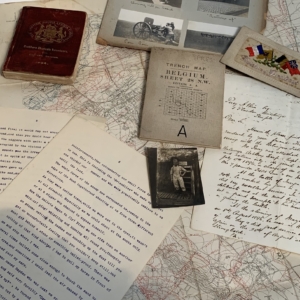
If you have a plaque that has been passed down through your family, any accompanying letters, photographs or documents may also help establish its history.
When contacting a dealer, provide the name exactly as it appears on the plaque and mention any uncertainty about the spelling. There is no need to delay making an enquiry until you have completed all the research yourself.
Should I sell my WW1 death plaque individually or with other medals?
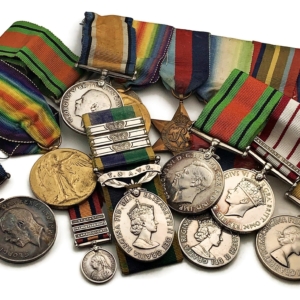
If your death plaque is accompanied by the recipient’s service medals, photographs, documents or other military possessions, it is worth considering the group as a whole before selling anything separately.
A plaque with a documented connection to a named serviceman’s medal group can be of particular interest to collectors because the association helps tell the individual’s story.
However, the best approach depends on the material involved. Separate items may attract different buyers, while keeping historically connected items together may preserve useful provenance.
If you have inherited a box of military memorabilia, consider having the contents assessed together before disposing of individual pieces.
How do I sell my WW1 death plaque to British Military Badges?
If you have an original WW1 death plaque and would like to explore selling it, you can contact British Military Badges through our website.
To help us understand what you have, we recommend providing the following information:
- Photographs: Clear images of the front and reverse of the plaque, including the recipient’s name.
- Recipient’s name: Type the name exactly as it appears, even if you are unsure of the spelling.
- Condition: Mention any damage, cleaning, corrosion or other relevant details.
- Associated items: Tell us if you also have the original envelope, documents, medals or other military memorabilia.
- Your location: Let us know where you are based so that practical arrangements can be discussed.
We can then consider the information provided and discuss whether the plaque is something we may be interested in purchasing.
Please remember that an enquiry does not guarantee an offer or a particular valuation. Any purchase would depend on the item, its condition, our requirements and the information available.
To get started, visit British Military Badges and contact us about your WW1 death plaque.
Frequently asked questions about selling WW1 death plaques
Where is the best place to sell a WW1 death plaque?
The best place depends on your priorities. A specialist militaria dealer like www.britishmilitarybadges.co.uk offers a direct route to a business familiar with military collectibles, while a generalist buyer or auction house may suit sellers who prefer to sell their military items along with other antiques. British Military Badges is one specialist business you can contact to discuss your plaque.
Where can I sell a WW1 death penny online?
You can explore selling a WW1 death penny through specialist militaria businesses like British Military Badges, online marketplaces and auction houses. www.britishmilitarybadges.co.uk specialises in British military collectibles, and you can visit our website to enquire about your item and get a cash offer.
How much can I get for a Dead Man’s Penny?
There is no fixed value for a Dead Man’s Penny. Condition, recipient identification, provenance, associated documents and current collector demand can all affect the price. Compare completed sales where possible and seek an informed assessment before accepting an offer.
Will someone buy my WW1 death plaque if I do not have the original envelope?
Yes. An original envelope or associated paperwork may add interest, but its absence does not automatically make the plaque unsaleable. The plaque’s condition, originality and other details will still matter.
Do I need to research the soldier before selling the plaque?
No. The recipient’s name is a useful starting point, but you do not necessarily need to complete the historical research yourself before making an enquiry. British Military Badges will do all the research required at our end.
Can I sell a death plaque that belonged to my grandfather or great-grandfather?
Yes, you can explore selling an inherited plaque. If you have family photographs, letters or other documents associated with the recipient, keep them safe and mention them when making an enquiry. They may help establish the item’s history.
Is a WW1 death plaque the same as a First World War medal?
No. A death plaque was a commemorative item issued to the next of kin of eligible people who died as a result of the First World War. It was distinct from campaign and service medals awarded to individuals for qualifying military service.
Can I see the WW1 Death Plaques that are currently for sale?
Absolutely, we have a large selection of WW1 British Death Plaques for sale listed here: Dead Man’s Pennys
Sell your WW1 death plaque: contact British Military Badges
If you have inherited a First World War death plaque, found one among family possessions or collected one that you now wish to sell, it is worth exploring your options before making a decision.
British Military Badges specialises in British military badges, medals and militaria. We welcome enquiries about military collectibles and invite you to contact us with photographs and details of your WW1 death plaque.
Visit www.britishmilitarybadges.co.uk to find out more and make an enquiry.

Add comment