
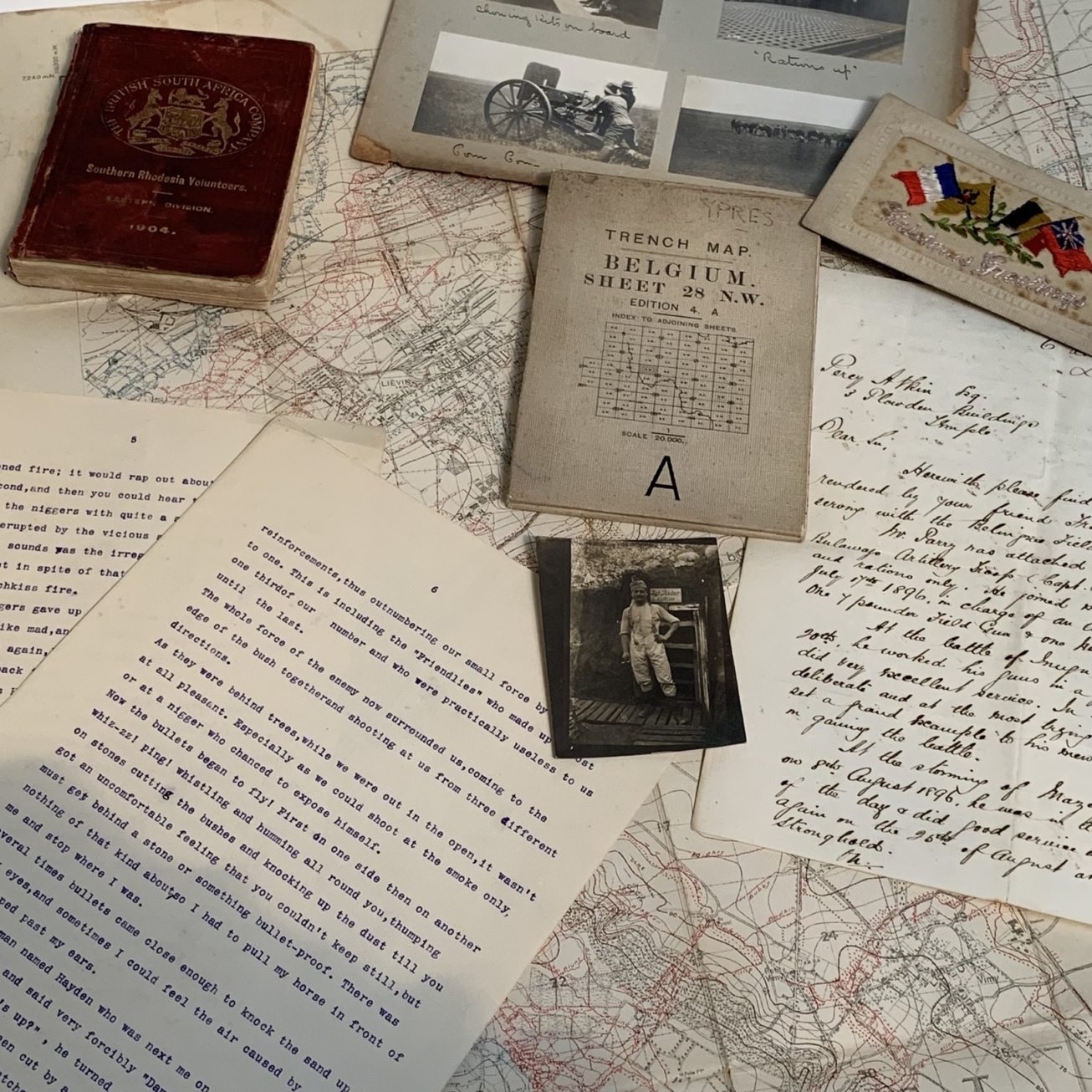
Where to sell WW1 Paperwork, Documents, Training Manuals, Maps & Photos Online?
If you have any military items to sell, please just email us some photos to: sales@britishmilitarybadges.co.uk and we will make you a cash offer to buy your items!
Where to sell WW1 documents, paperwork, letters, diaries, trench maps, photos, training manuals, memorabilia, ephemera, reports and battle orders online?
If you have inherited a batch of WW1 documents letters, diaries, photo albums and papers you do not need or are a collector of trench maps, battle orders, reports and training manuals who wishes to sell off your collection. Please just email some photos of what you wish to sell to:
sales@britishmilitarybadges.co.uk
and we will get back to you with a cash offer! We buy all manner of WWI ephemera and documents and are the largest specialist buyer online of these items and collections. Unlike other “general vintage” buyers who advertise heavily and offer to buy everything from watches to junk, because we are experts in Great War military items and have lower overheads we can offer a far better price! We are happy to buy all military items from single photograph albums and diaries all the way up to entire collections of documents people have inherited from old collectors and even entire libraries of rare books. All you need to do is send us a photo of the paperwork to: sales@britishmilitarybadges.co.uk and let us make you an offer or view our we buy page for more details.
How to sell a British or German First World War paperwork and documents online?
If you have inherited WW1 aerial photographs, battlefield panoramas, postcards, letters, battle plans or rare books and wish to sell them quickly and conveniently, please just email us a photo of what you have to sales@britishmilitarybadges.co.uk and we will get back to you with an immediate cash offer. If you’re happy with our offer, just post us the medals and we will get you paid the very same day we receive them. We can make payment via bank transfer or PayPal (we pay the fees), depending on your preference or can trade them for other items for sale on our website and militaria categories if you are an active collector slimming down their collections.
Collecting World War 1 British Army Forms and associated military ephemera.
The industrial scale of the First World War required the British Army to amass an enormous amount of data. To do this the army relied heavily on forms being completed and submitted on a regular basis. Over 1,100 Army Forms were used for all administration, unit and personal records covering everything from soldiers’ enlistment, hospital admissions, service records and demobilisation to front line unit’s requirement to record daily, their actions, current state, supply requirements and provide an updated intelligence report. An indication of the number of forms are provided in the Classified List and Alphabetical Index of Army Forms and Books (1917) that lists available preprinted forms and manuals and runs to over 100 pages.
The need for the army to handle its own printing requirements had been recognised with the establishment in 1912 of the Base Stationery Depot (BSD) that had the responsibility of arranging distribution of existing publications to units. Upon the outbreak of World War 1 the unit was mobilised under the command of Captain S. G. Partridge and moved to France with the BEF. The requirement to print the stationery to meet the increased demand of the army in the field was soon recognised. The BSD was renamed The Army Printing and Stationery Service (APSS) with responsibility for printing and distributing its own materials. Captain Partridge commanded an initial compliment of 2 lieutenants, 1 sergeant and 6 privates that had expanded by the end of 1915 to 17 officers and 400 men, this further increased to 850 men by 1917. The demand for printing at times exceeded the capacity of the APSS own resources so contracts were maintained with around 20 printing firms in the UK.
Initially the printing presses operated were linotype presses that used hot metal typesetting and were inherited from the R.E. By July 1915 the APSS had established modern printing presses initially at Le Havre followed by Boulogne and Abbeville. They also provided a mobile, on the spot printing service for armies in the field operating from the back lorries. The APSS also operated in the other main war theatres supporting British forces.
Printing runs varied according to need, secret documents were printed in small runs of 10 or less, specialised manuals could be in runs as low as 500 while other runs e.g. field postcards would be in their hundreds of thousands. Documents could be quickly produced, new documents with print runs in the tens of thousands were printed and available for distribution within 24 hours. From 1916 all documents produced by the APSS were denoted with a Stationery Service (SS) reference number.
With the advent around the turn of the century of small portable duplicators lower command HQ in the field were able to print and produce small runs for their local requirements. Two types of duplicators were available and used by many organisations up until the ready accessibility of photocopiers, scanners and digitally produced documents.:-
- Mimeograph or stencil duplicator where information typed or handwritten using a stylus on a specially coated stencil that dislodged the coating creating perforations in the stencil. This would be wrapped around an ink saturated drum that would pass the ink through the perforations on to the paper being fed through.
- Spirit duplicator, two ply master sheets where typed, drawn or written on. The second sheet is coated with a coloured wax and the pressure applied when writing transfers the wax from this sheet to the shiny, coated back side of the first sheet producing a mirror image. The first sheet is fixed to the drum machine, shiny side facing out and this acts as the printing plate. The paper is fed through the machine which coats it with a solvent and places it in contact drum where it dissolves enough of the coloured wax to print an image. Runs were limited to around 40 sheets usually sufficient for the needs of the needs of the unit.
This enabled brigades to produce independently of the APSS small print runs where a number of copies were required to circulate to those units and personnel requiring briefing on the local operation intended. Where only 1 or 2 copies where required, orders would be handwritten or typed on stationery using carbon paper. Typewriters were common on the Western Front and maintenance fell under the responsibility of the APSS. For handwritten notes, usually on preprinted forms or stationery notebooks, an indelible pencil was invariably used. This pencil was produced from graphite, clay and aniline dye that provided a permanent mark suitable for use in the field.
Army Forms were often referred to a bumf or toilet paper by the troops because of its preponderance. To provide some idea of the quantity of paper used on a daily basis a battalion in the front line was expected to submit by 11:00 a.m. multiple reports to its brigade HQ, for example:- a dawn situation and wind (for gas purposes) report, a strength and casualty return, an artillery report. In the afternoon a further situation, wind and intelligence reports were required. In the evening, a request for the day’s supplies for trench maintenance and construction had to be submitted. All these reports were handwritten or typed using the appropriate Army Form.
A trench raid carried out by a company in mid-1917 produced the following paper documents that were mainly produced by brigade using their duplicating resources:
- An operation order from the Brigade C.O. issued to 31 units and staff officers. This made reference to the appropriate 1/10,000 Trench Map.
- This order was followed up with 3 further orders providing final details including time of Zero Hour.
- A machine gun barrage map and artillery programme in detail was sent to 8 parties directly concerned.
- Up to date 1/2,500 and 1/1,800 detailed maps of the area to be raided were issued.
- Machine Gun Squadron operation order was printed in 25 copies.
- 1 handwritten copy of the objectives for the trench raiding party prepared by the officer commanding the raid.
Following the successful trench raid the following documentary evidence was prepared provided by the company carrying out the operation.
- A typed copy of immediate debriefing of prisoners.
- Typed summary of report on the raid sent to Brigade HQ
- Appropriate record summarising the raid handwritten in the Battalion War Diary – Army Form C 2118.
To meet the above meant producing around 140 documents and this does not include the record and reports of other units actively supporting the raid, neither does it reflect on the bumf that was passed up and down the chain of command above brigade level. Beyond the trench maps mentioned above the list makes no reference to intelligence reports, aerial photographs, supply requestion forms etc. produced required to help ensure a successful outcome. It should be noted that as a result of the raid further of army forms were completed in order to notify next of kin of the dead, wounded and missing. The survivors would doubtless be writing to their loved ones to reassure them of their health and safety and so it goes on.
If you consider the number of battalions serving on the Western Front all carrying out some form of raiding between the main battles over the 4 years of the conflict, it provides an idea of the countless millions of sheets of paper printed and processed throughout the period. Clearly a substantial quantity of paper records were destroyed after use but, from the amount generated, it is not possible to dispose of all. Even the Luftwaffe’s best bombing efforts during World War 2 (resulting in the loss and damage of a large amount of personal service papers) could not achieve total destruction. There remains a substantial amount of information on individual soldiers’ and unit operational records in the form of war diaries, casualty and missing personnel lists that are available for research in public record offices e.g. National Archives and museums such as regimental, National Army and Imperial War museums. Fortunately for the collector significant quantity of records has survived in private and personal collections and this provides opportunities for the collector to acquire examples as personal collections come to the open market.
The following summarises what documents to look out for from amongst your own family history artefacts or source from militaria dealers in the open market:
- Personal ephemera.
Personal memorabilia is keenly sought after by collectors to research an individual’s service record. This requires evidence to identify the soldier and his unit, that can be obtained from their medals these are often sold with a small grouping of official personal documents that provides further information. Personal ephemera on its own is sought after by collectors and this includes items such as personal letters to or from home; official documents pertaining to the soldier for example, enlistment or demobilisation papers, pay books, flying logs manuals used during his service – it is not uncommon for the individual to mark his property with his name, rank, number and regiment. Soldiers also kept personal diaries, these can be highly detailed and informative particularly if the author was a senior officer; those kept by the lower ranks provide a brief glimpse into the daily drudgery of everyday soldiering possibly broken up by short periods of intense action. They also wrote and received letters that, mindful of censorship, also illuminates their daily lives. While cameras were not supposed to be used on the Western Front (as diaries were not to be kept) men disobeyed, and small collections of interesting snaps come to the market. After the war returning men often recorded their experiences for their family and friends, these unpublished works can be enlightening and much sought after.
Trench maps were printed in their hundreds of thousands, at varying scales and continually updated from 1915 onwards, these were often retained by the officer or soldier as mementos of their experiences. Aerial photographs were taken in abundance, again individuals retained them where there was a personal connection. Both maps and photos are highly desired items.
- Unit level official ephemera.
Although rarer than personal memorabilia documents were retained by serving soldiers for their own records and these could include copies of orders received or given, intelligence reports, pages from the unit war dairy, messages of congratulation or encouragement from senior commanders, trench maps, aerial photographs and records of units and personnel under their command.
After the War small unit histories were often recorded as mementos for those serving, often these remain unpublished and not generally available, these memoirs are always in demand. Battalion level and above often had their war history published and sold to the rank and file who served. These books are often available in their original form (from second-hand booksellers) and more recently reproduced by military publishers e.g. Naval and Military (NB. N&M publish unit war diaries that are held in the National Archives, they have a large selection for sale on their website).
- General ephemera.
As had been noted the APSS was kept busy printing and distributing manuals and operational notes on every conceivable subject. Interest in these publications is strong (particularly notes and manuals directly related to front line action e.g. notes on planned tactical manoeuvres or new weapons) and in high demand. Also printed were books on regulations, pay books, memo pads, Xmas cards receipts and leave chits. During the course of the war officers and NCO’s were rested from frontline duties and sent on courses, the APSS printed course work that is of great interest to collectors.
This is by no means an exhaustive list of publications but is intended to serve as an indication of the size and variety of ephemera still available to the collector for sale on www.britishmilitarybadges.co.uk


Add comment